

Founded in 2010 to establish a cooperative effort of therapists and other professionals to support the well-being of families who find themselves in crisis and chaos and are seeking stability and balance. Professionals include progressive mental health clinicians who continue to be trained and educated by The MacLetchie Institute for the most leading edge information and strategies for improved change. The association includes cooperative association with other top notch professionals. Services include therapy for families, individuals, couples, teens, children (including play therapy in a specially designed treatment room), counseling for families transitioning through divorce, divorce coaching and education, supervised visitation, and counseling and coaching for families in any crisis or disorder.
Our Team
- Dr. Heather Macletchie EhingerLicensed Marriage & Family Therapist
- Jackie WoodsLicensed Marriage & Family Therapist
- Zoe TarrantIndividual & Family Therapist
- Andrew Fabian
- Jackie SmallProfessional Counselor
- Frank OliveiraLicensed Marriage & Family Therapist
- Elizabeth CoxCFP, CFA, CDFA
- Tami-Nicole GomesOffice Manager
You need to respond to every WhatsApp lead within minutes, but juggling multiple tools is slowing your team down. Picking the wrong platform costs you sales daily.
This guide compares eight WhatsApp marketing software options for lead follow-ups, including a clear breakdown of what to look for and who wins. You will know exactly which tool fits your workflow and budget by the end.
What to Look For in WhatsApp Marketing Software for Lead Follow-Ups
Choosing the right WhatsApp marketing software for lead follow-ups hinges on a few non-negotiable features that separate tools that convert from those that merely send messages. The best platforms combine automation, compliance, and analytics into a single workflow that moves prospects through your sales pipeline without manual effort. Focus on outcomes like faster response times and higher engagement, not just flashy dashboards.
Start with automation capabilities. Look for drip campaigns that trigger a sequence of messages based on user actions, such as visiting a pricing page or clicking a link. Chatbot workflows should handle common questions instantly, while routing complex conversations to a human agent when needed.
CRM integration is the backbone of effective follow-ups. Native integrations are ideal, but a tool that connects via Zapier can still sync leads, update contact records, and log interactions automatically. Without this, your team will waste time copying data between systems.
Message templates matter more than most buyers realize. Pre-approved templates ensure your broadcasts comply with WhatsApp Business API policies and avoid being flagged as spam. Test how easily you can edit templates and request new ones for different stages of your follow-up sequences.
Opt-in consent management is non-negotiable for long-term deliverability. The software should track when a contact agreed to receive messages and prevent you from messaging anyone who has withdrawn consent. This protects your sender reputation and keeps your account from being banned.
Analytics should answer one question: are your follow-ups working? Look for an analytics dashboard that tracks response rates, conversion tracking, and click-through metrics per campaign. A/B testing features let you refine subject lines, message copy, and send times without guesswork.
Security features deserve equal attention. End-to-end encryption is standard with WhatsApp, but the software layer must also protect your contact database and comply with data privacy regulations. Check for role-based access controls and audit logs to control who sees sensitive lead information.
Finally, understand bulk messaging limits before committing. WhatsApp imposes restrictions on how many conversations you can initiate per day, and the software should show your current usage and projected limits clearly. Green tick verification adds credibility to your business profile, which improves trust during cold outreach and increases the likelihood that prospects respond to your first message.
1. Com.bot - Best Overall
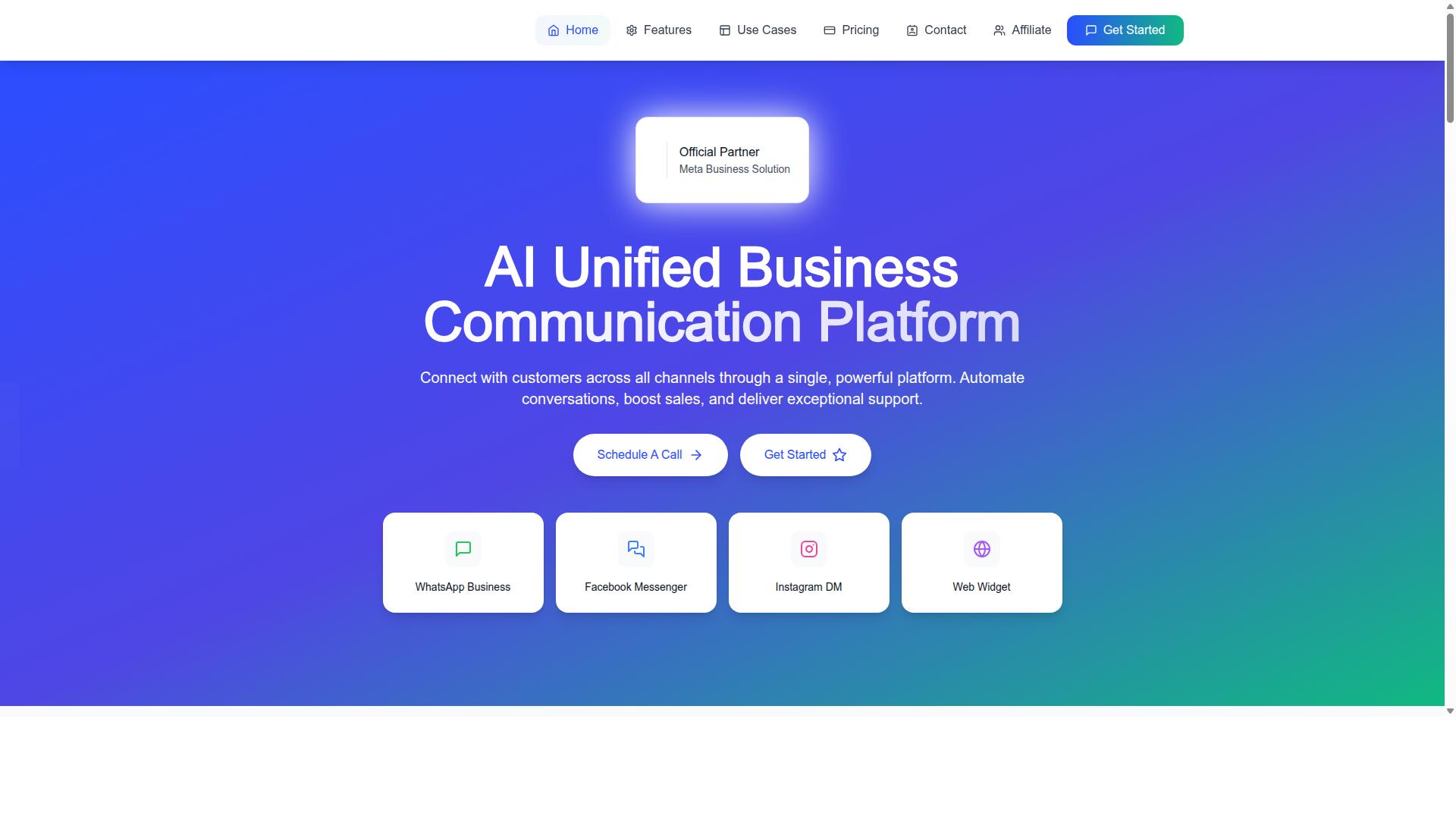
Com.bot earns the top spot for lead follow-ups by combining a unified inbox, visual bot builder, and native payments into one platform that scales from SMBs to government bodies. As an official Meta Business Partner, Com.bot processes over 25 million messages daily across a customer base of 23,000+ active businesses. That scale means the platform is battle-tested for high-volume lead follow-up automation.
The reach is genuinely global. Com.bot serves clients in 50+ countries, including 100+ government bodies and 500+ global partners. For teams that need enterprise-grade security with end-to-end encryption, this platform delivers without sacrificing speed. Real-time message delivery and quick setup make it practical for sales teams that need results fast.
What separates Com.bot from typical WhatsApp tools is the breadth of the ecosystem. Beyond messaging, it includes Tasks.Bot for enterprise task automation, Tickets.Bot for event ticketing, and Calendars.Bot for AI appointment booking. These adjacent tools mean your lead follow-up workflow can extend into scheduling and task management without jumping between platforms.
With 100K+ bots already created on the platform, the automation capabilities are proven at scale. No markup on WhatsApp conversations keeps costs predictable for growing teams.
Unified Inbox and Automation for Faster Lead Response
Com.bot's unified inbox centralizes all customer conversations, so your team never misses a lead, while automation handles the repetitive follow-ups instantly. The inbox consolidates WhatsApp, Facebook Messenger, Instagram DM, and web widget chats into a single view. Your team works from one screen instead of toggling between apps, which cuts response time dramatically.
The visual bot builder uses a drag-and-drop interface that anyone can learn quickly. You create follow-up sequences that trigger based on customer actions, such as clicking a link, sending a keyword, or abandoning a cart. These chatbot workflows handle the first touch instantly, then route hotter leads to human agents when needed.
Native payments close the loop directly inside the chat. When a lead is ready to buy, they can pay without leaving WhatsApp, which removes friction from the sales pipeline. This feature is rare among WhatsApp marketing tools and gives Com.bot a real edge for revenue-focused teams.
The platform also supports:
- Bulk messaging for broadcast campaigns
- Order updates and appointment reminders
- Payment collection within conversations
- Team collaboration with role-based access
- An automation builder with 1000+ integrations
Personalized messaging at scale is where the platform shines. You can send follow-up sequences that feel individual even when you are managing thousands of leads. The two-way communication keeps conversations natural while the automation handles timing and triggers in the background.
2. Wati
Wati is a solid WhatsApp Business API provider known for its user-friendly broadcast and template management, but its lead follow-up features aren't as deep as Com.bot's. It is often described as an SMB-friendly WhatsApp marketing tool, and multiple industry roundups include it among the top options for teams getting started with the platform.
The platform typically excels at easy broadcast messaging and pre-approved message templates. These features make it straightforward for small teams to send announcements, appointment reminders, and order updates to customers without a steep learning curve.
Wati also offers basic CRM integrations that help you store contacts and log conversations. For businesses that need simple contact management and a clear view of their sales pipeline, this level of integration often works well enough.
However, Wati's automation for complex follow-up sequences is limited. If your lead follow-up strategy depends on multi-step drip campaigns, conditional branching, or deep chat automation, you may find the tool restrictive.
Multi-channel support is also less robust compared to platforms that unify WhatsApp with other messaging apps. Teams that want a single inbox for WhatsApp, email, and social channels may need to juggle multiple tools instead.
For small teams with straightforward needs, Wati is a dependable choice. For businesses that want more advanced lead follow-up automation and richer personalized messaging workflows, other solutions often provide greater flexibility.
3. Twilio
Twilio is a developer-first platform that gives you full control over WhatsApp messaging, but it requires significant coding expertise to build lead follow-up workflows. It is a communication powerhouse providing WhatsApp API access for businesses that need deep customization.
This solution shines for enterprises with in-house development teams who want to build bespoke systems from scratch. The flexibility is unmatched, and the platform scales effortlessly as your messaging volume grows.
However, Twilio does not offer a visual bot builder or ready-made marketing features. Marketers will not find prebuilt drip campaigns, click-to-chat ads, or abandoned cart recovery templates waiting out of the box.
Instead, your team must code every element of the customer engagement journey. That includes contact management, segmentation, message templates, and the analytics dashboard that tracks response rates.
Twilio is best for custom solutions, not for marketers who need out-of-the-box automation. If your priority is speed to launch and easy lead follow-up automation, this platform demands a serious engineering investment.
For teams that already employ API specialists, the payoff can be substantial. You get granular control over two-way communication, chatbot workflows, and CRM integration exactly how you want them.
But for most sales and marketing teams, the coding barrier slows down sales pipeline momentum. Research suggests that teams without dedicated developers often find the learning curve steep and the maintenance burden heavy.
Consider Twilio if your organization treats WhatsApp as a core engineering project. Otherwise, a purpose-built marketing tool will deliver faster results with far less technical overhead.
4. Bird (formerly MessageBird)
Bird (formerly MessageBird) offers a robust omnichannel platform with strong API capabilities, but its lead follow-up features are more geared toward developers than marketers. The platform connects WhatsApp, SMS, email, and other channels into a single communication hub, which makes it attractive for businesses that need broad reach across customer touchpoints.
Its analytics dashboard provides visibility into message delivery and conversation trends, helping teams track how leads respond across channels. That data can inform follow-up sequences and improve customer engagement over time, particularly for organizations managing high message volumes.
However, Bird's setup leans heavily on its APIs. Non-technical users often face a learning curve when configuring chat automation or message templates without developer support. The platform is powerful, but it rewards teams with coding resources more than small marketing departments.
For businesses with in-house technical staff, Bird can handle complex two-way communication and broadcast messaging at scale. For those seeking a simpler path to lead follow-up automation, a more visual, drag-and-drop solution may fit better.
5. AiSensy
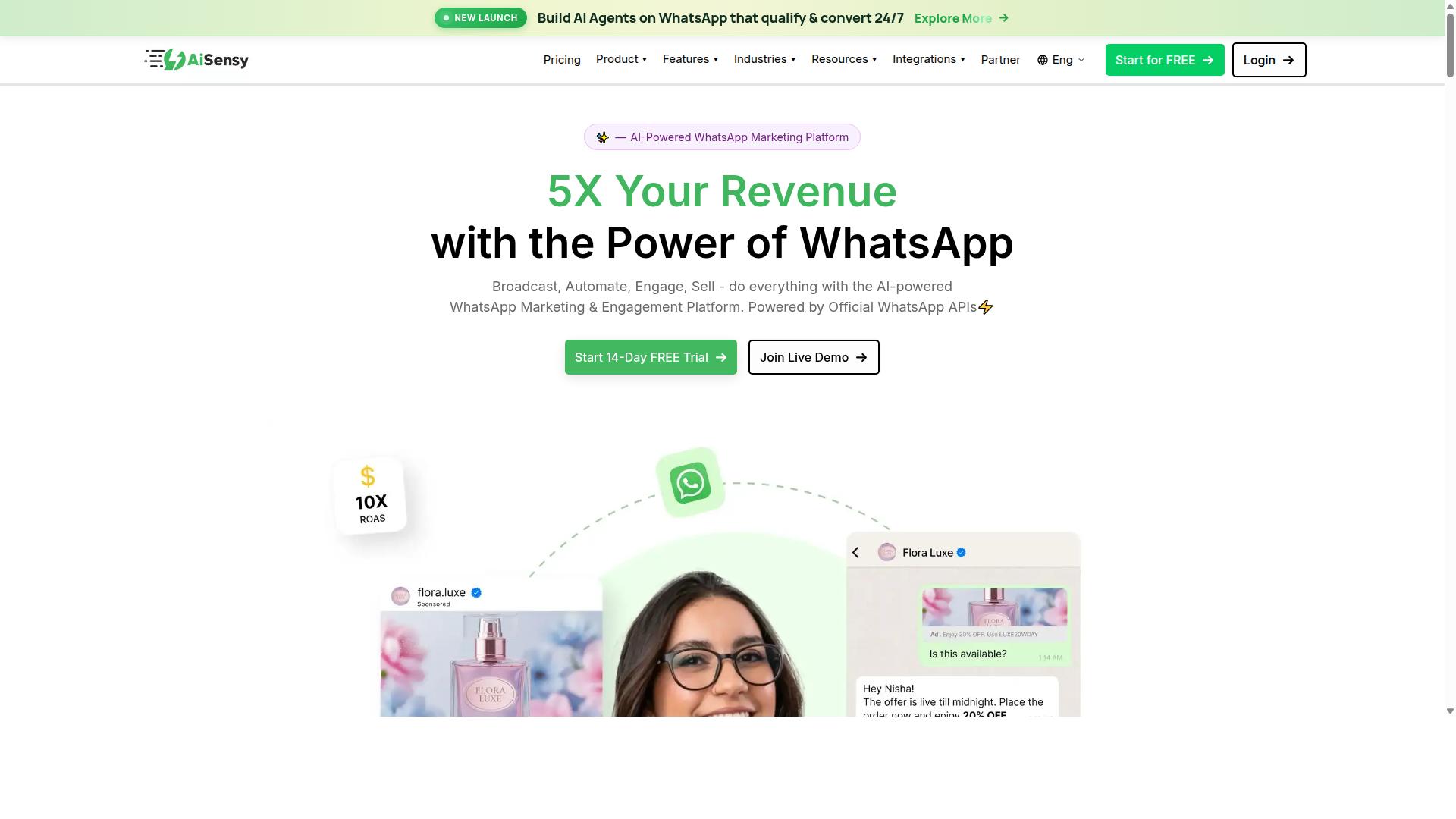
AiSensy focuses on broadcast messaging and click-to-chat ads, making it a good fit for promotional campaigns, but its follow-up automation is less comprehensive. The platform is recognized in industry roundups as one of the leading WhatsApp marketing tools, particularly for businesses that want to reach a wide audience quickly.
Bulk messaging is where AiSensy shines. You can send promotional updates to large contact lists in a single action, which works well for flash sales, product launches, or seasonal campaigns. The click-to-chat ad integration also helps turn Facebook and Instagram ads into direct WhatsApp conversations, reducing friction between ad click and customer reply.
Template management is another practical strength. AiSensy lets you organize approved message templates for broadcast use, which keeps your team aligned on messaging and helps maintain compliance with WhatsApp's policies. For top-of-funnel engagement, this tool covers the essentials without overcomplicating the setup.
However, lead follow-up automation is not AiSensy's core focus. The platform may require additional tools if you need advanced drip campaigns, deep CRM integration, or complex chatbot workflows that nurture leads over several days. Teams with a simple broadcast-first strategy will find it useful, while those expecting full sales pipeline management may need to layer in other software.
For businesses that prioritize reach over relationship building, AiSensy is a solid choice. Just be prepared to supplement it with dedicated follow-up automation if your goal is consistent, multi-touch lead nurturing rather than one-off promotional blasts.
6. Interakt
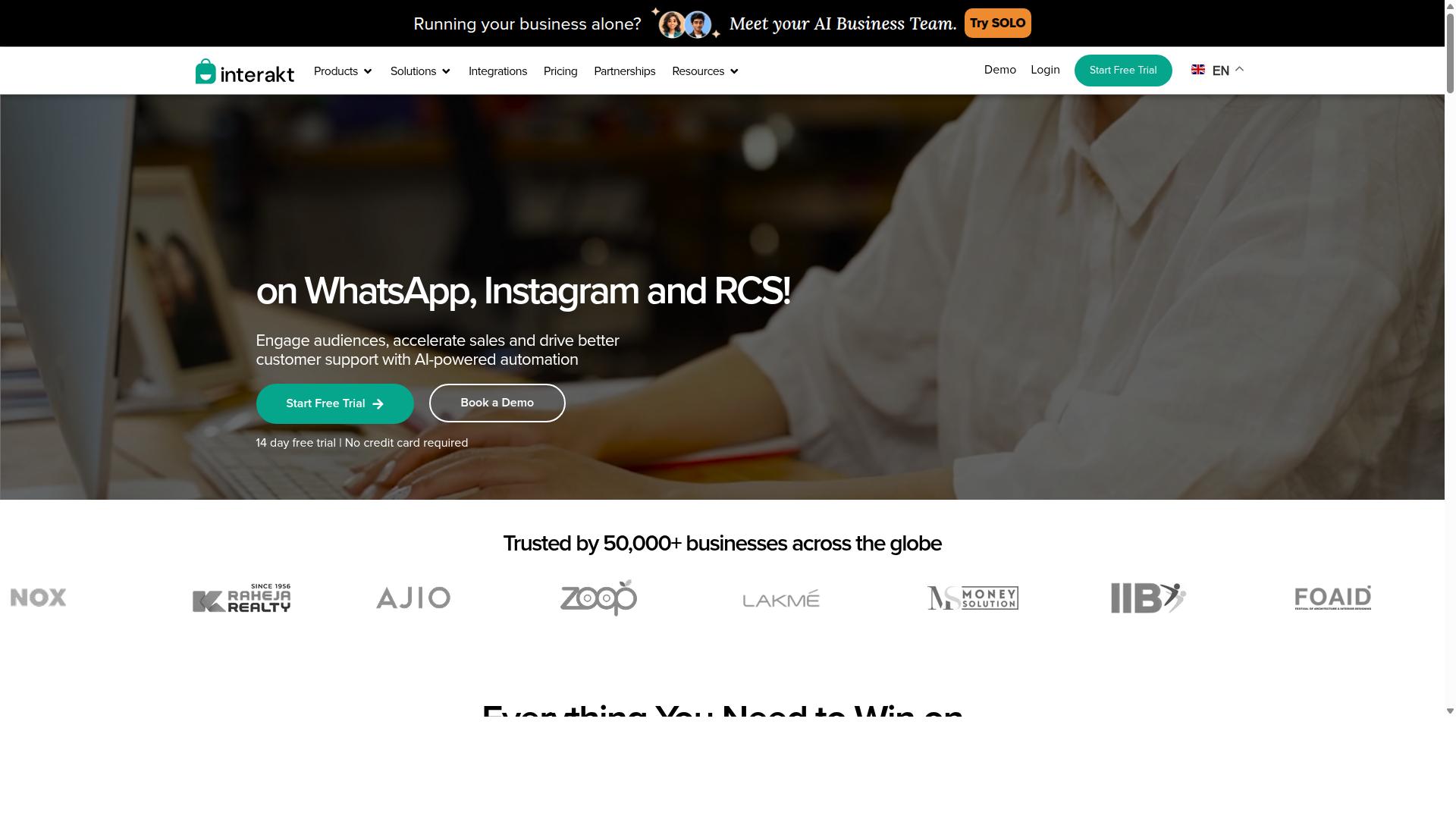
Interakt is a popular choice for e-commerce businesses, offering features like abandoned cart recovery and order updates, but its multi-channel support is limited. It focuses heavily on WhatsApp-centric workflows designed to keep online stores running smoothly.
The platform is known for its integration with Shopify and other e-commerce platforms, making it a practical fit for store owners who want to automate customer communication. Typical use cases include sending order confirmations, shipping alerts, and appointment reminders directly through WhatsApp.
For lead follow-up automation, Interakt helps merchants re-engage shoppers who left items in their carts. This approach targets high-intent buyers who already showed interest, which can improve response rates compared to cold outreach.
However, businesses that need a broader reach across Facebook, Instagram, or other messaging channels may find Interakt's scope too narrow. It is best suited for teams that operate primarily on WhatsApp and want a dedicated e-commerce tool rather than a full multi-channel platform.
7. Respond.io
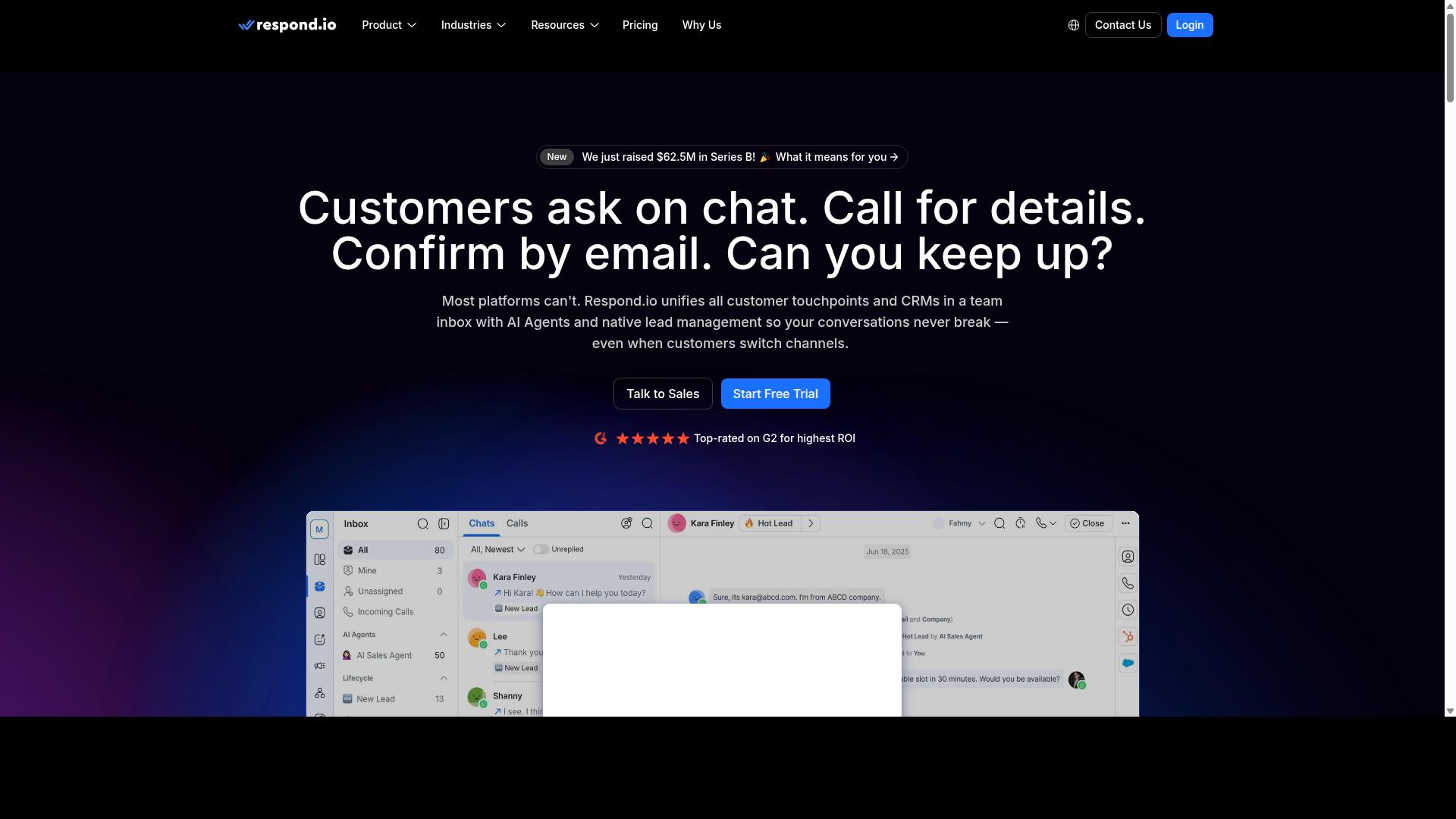
Respond.io excels at routing conversations across multiple channels and offers a decent automation builder, but it's more about support than proactive lead follow-up. It's positioned as a customer conversation management platform, which makes it a strong fit for teams that need to keep every chat organized in one place.
The platform shines with its unified inbox, where agents can handle WhatsApp, web chat, and social messages without switching tabs. Routing rules help direct conversations to the right team member based on language, location, or the specific campaign that generated the lead.
Its analytics dashboard gives managers visibility into response times and conversation volumes, which supports better staffing decisions. That said, the automation builder leans toward customer support workflows rather than sophisticated marketing sequences like drip campaigns or lead scoring.
Respond.io integrates with popular CRM systems, so syncing contacts and conversation history is straightforward. However, it lacks native payment collection and doesn't offer the advanced follow-up sequences that marketing teams often need for nurturing leads over time.
For businesses that prioritize support efficiency and multi-channel routing, Respond.io is a solid choice. But if your goal is automated lead follow-up with broadcast messaging and personalized drip sequences, you may find its marketing capabilities somewhat limited.
8. Gupshup

Gupshup is an API-first platform with strong chatbot capabilities, but it's primarily for developers and lacks a user-friendly interface for marketers. This tool gives teams deep control over WhatsApp Business API integrations, making it a favorite among engineering-led organizations.
The platform offers broad scalability and extensive API breadth, which means it can handle high-volume messaging across multiple channels. However, that power comes with a steep learning curve. Building chatbot workflows with Gupshup typically requires coding skills and a dedicated technical team.
For lead follow-up automation, Gupshup can be highly effective when you have the right expertise. Developers can create custom follow-up sequences, work together with CRM systems, and manage bulk messaging limits with precision.
That said, this platform may be overkill for small businesses. If your goal is simple broadcast messaging or quick drip campaigns, the setup effort rarely justifies the payoff. Marketing teams without engineering support will likely struggle with the technical demands.
Gupshup is best suited for enterprises with established development resources. Smaller operations should consider more accessible options that offer chat automation without requiring a technical team to manage everyday tasks.
How to Choose the Right Option
Choosing the right WhatsApp marketing software comes down to your business size, technical resources, and the depth of automation you need for lead follow-ups. Start by assessing whether your team can handle code or needs a no-code solution, since that single decision filters out half the market.
Next, estimate your monthly lead volume and the channels you actually use. If you only need WhatsApp, a single-channel tool might suffice, but multi-channel support becomes critical when your customers live on Instagram and Facebook too.
Budget is the third filter. Compare quarterly or annual pricing against the features you cannot live without, such as CRM integration, drip campaigns, or broadcast messaging. Make a must-have list before you compare tools so you do not get distracted by flashy extras you will never use.
Finally, consider scalability and support. Your lead volume will grow, and so should your software, without forcing you to migrate platforms mid-year. Use this quick checklist when evaluating options:
- Does it support WhatsApp Business API with no markup on messaging rates?
- Can your team operate it without developers, or does it require technical setup?
- Does it include CRM integration, chat automation, and follow-up sequences natively?
- Is pricing transparent per quarter, with add-ons you can toggle as needed?
- Does it support multiple channels so you can consolidate tools later?
Experts recommend prioritizing tools that grow with your sales pipeline rather than ones you will outgrow in six months. A slightly higher price today often beats a migration headache tomorrow.
Scaling with Com.bot's Multi-Channel Platform and Pricing
For businesses ready to scale lead follow-up across WhatsApp, Facebook, and Instagram, Com.bot's multi-channel platform offers transparent pricing that grows with you. The Silver Plan at $149 per quarter suits small teams testing automation, while the Gold Plan at $349 per quarter covers most growing businesses with room to expand.
Larger enterprises with high-volume follow-up sequences should consider the Platinum V1 plan at $2500 per quarter, which aligns with serious operational scale. Add-ons cost $10 per month for additional team members, social channels, external actions per 5000, bot triggers per 25000, or an ecom store, so you pay only for what you actually use.
The Gold plan is the best fit for most growing businesses because it balances capability and cost without locking you into enterprise pricing. WhatsApp messaging runs at actual Meta rates with no markup, which keeps your per-message costs predictable as lead volume climbs.
Because Com.bot handles WhatsApp, Facebook, and Instagram in one platform, you eliminate the need for separate tools per channel. That consolidation simplifies your contact management, segmentation, and analytics dashboard while reducing monthly software overhead.
For teams needing deeper configuration, dedicated support is available at $49 per hour for WABA, CRM, and Inbox setup, and $99 per hour for Ecommerce, Bots, and Automations. That pay-as-you-go support model means you only invest in help when a complex workflow demands it, keeping your lead follow-up automation on track without bloating your budget.
Final Verdict
Regarding WhatsApp lead follow-up automation, Com.bot is the clear winner for its unified inbox, visual bot builder, and proven track record. The platform processes 25M+ messages per day for more than 23,000 active customers, which speaks directly to its reliability at scale.
Com.bot holds official status as a Meta Business Partner, a distinction that matters for businesses relying on the WhatsApp Business API. This partnership means the platform meets Meta's strict requirements for security, compliance, and message deliverability.
The adoption goes well beyond small businesses. Over 100 government bodies and 500 global partners already trust Com.bot for their communication needs. That level of institutional confidence is hard to match in the WhatsApp marketing software space.
What makes Com.bot particularly effective for lead follow-ups is its multi-channel approach. You get chat automation, CRM integration, and broadcast messaging tools that work together to move leads through your sales pipeline without manual effort.
Enterprise security with end-to-end encryption ensures your customer conversations stay protected. Quick setup and integration mean you can start automating follow-up sequences within hours, not weeks.
For response rate improvements and customer engagement, Com.bot delivers real-time message delivery with no markup on WhatsApp conversations. The platform has powered 100K+ bots created, giving you a proven foundation for your own chatbot workflows.
Try Com.bot for your specific lead follow-up needs. Reach out to the team directly to discuss your use case and see how the platform handles your volume, segmentation, and messaging requirements.
Recommended Resources: