

Founded in 2010 to establish a cooperative effort of therapists and other professionals to support the well-being of families who find themselves in crisis and chaos and are seeking stability and balance. Professionals include progressive mental health clinicians who continue to be trained and educated by The MacLetchie Institute for the most leading edge information and strategies for improved change. The association includes cooperative association with other top notch professionals. Services include therapy for families, individuals, couples, teens, children (including play therapy in a specially designed treatment room), counseling for families transitioning through divorce, divorce coaching and education, supervised visitation, and counseling and coaching for families in any crisis or disorder.
Our Team
- Dr. Heather Macletchie EhingerLicensed Marriage & Family Therapist
- Jackie WoodsLicensed Marriage & Family Therapist
- Zoe TarrantIndividual & Family Therapist
- Andrew Fabian
- Jackie SmallProfessional Counselor
- Frank OliveiraLicensed Marriage & Family Therapist
- Elizabeth CoxCFP, CFA, CDFA
- Tami-Nicole GomesOffice Manager
Radiology departments choosing between Medicai and ProtonPACS face a concrete question: which platform actually connects to their existing RIS without months of custom work. The decision hinges on how each handles real-time data pulls, structured reports, and multi-site access, since most teams cannot afford another integration project that overruns its timeline.
By the end of this article you will have a side-by-side list of integration steps, feature gaps, and pricing models, plus a clear recommendation on which system fits a department already running a specific RIS and viewer stack.
Quick Verdict: Medicai Wins for RIS/PACS Integration
Medicai's unified cloud platform delivers faster RIS/PACS integration than ProtonPACS through native DICOM, HL7, and FHIR APIs. The company handles 50M+ yearly API transactions and 1M+ studies processed annually as evidence of proven scale.
The zero-footprint viewer reduces diagnostic delays while maintaining full security standards. All viewers carry HIPAA, GDPR, and FDA/CEE clearance for regulated medical environments.
Cloud deployment eliminates weeks of hardware installation and configuration required by on-premise ProtonPACS setups. This difference translates directly into reduced project timelines and lower infrastructure overhead for radiology departments seeking immediate interoperability gains.
At a glance: how Medicai compares to ProtonPACS on the features that matter most.
| Feature | Medicai | ProtonPACS |
|---|---|---|
| RIS/PACS Integration | ✓ | ✓ |
What Is Medicai?
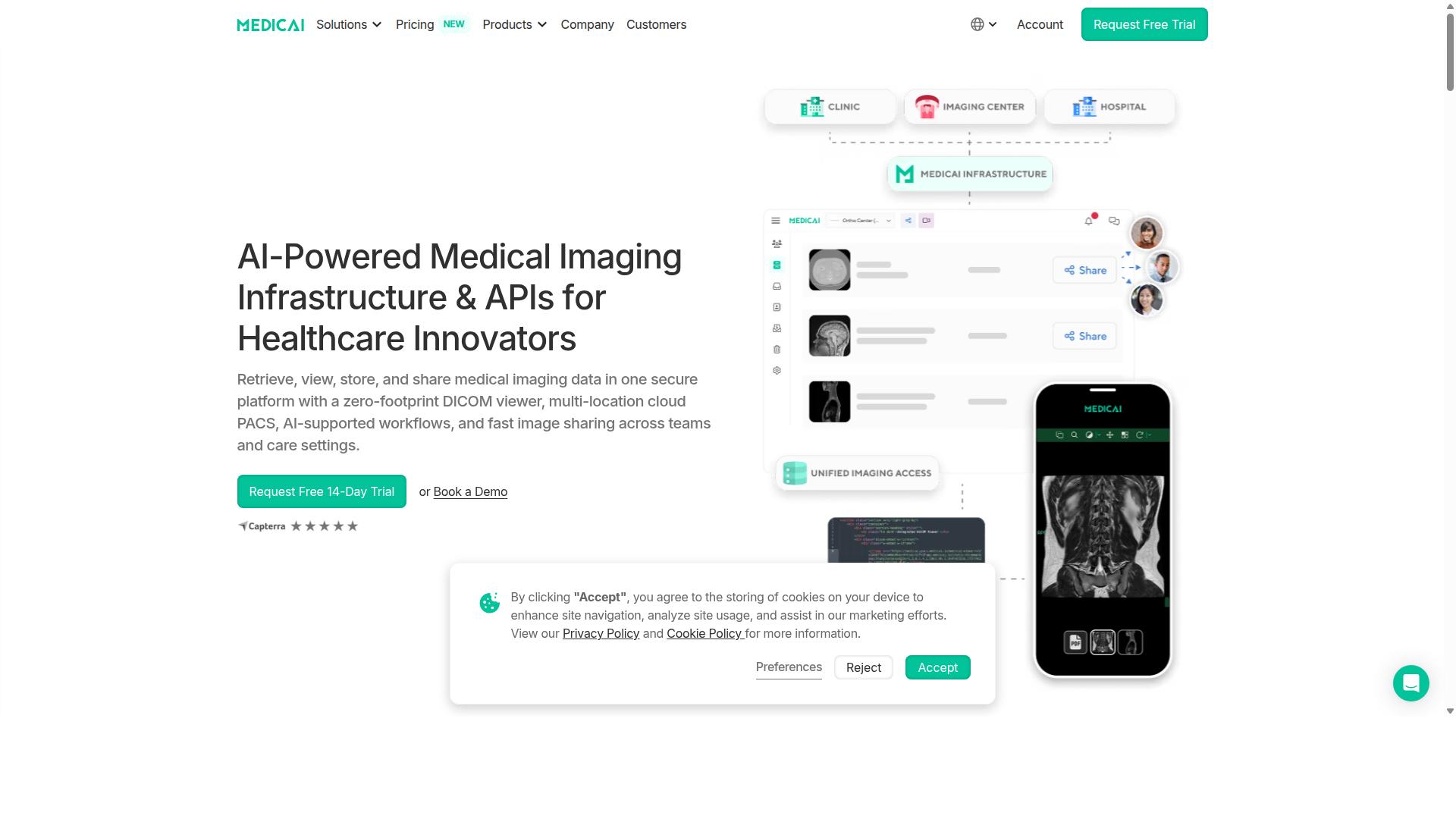
Medicai is a cloud-based medical imaging platform that lets healthcare teams retrieve, view, store, and share imaging data from a single secure interface. The platform centers around a zero-footprint DICOM viewer that requires no downloads or installations.
Four core modules power the system. CONNECT & RETRIEVE pulls imaging studies from existing PACS and RIS systems. STORE & MANAGE handles secure archiving with a vendor-neutral archive approach. ACCESS & VIEW delivers images through any browser. AI & INTEGRATION supports third-party tools and workflow automation.
Over 1.7 million studies currently reside in the system. Global availability runs through a Microsoft Azure backend that maintains HIPAA compliance and enterprise-grade security standards.
Healthcare organizations choose Medicai when they need RIS/PACS integration without on-premise hardware. The cloud deployment reduces infrastructure costs and simplifies remote access for radiologists and referring physicians across multiple locations.
What Is ProtonPACS?
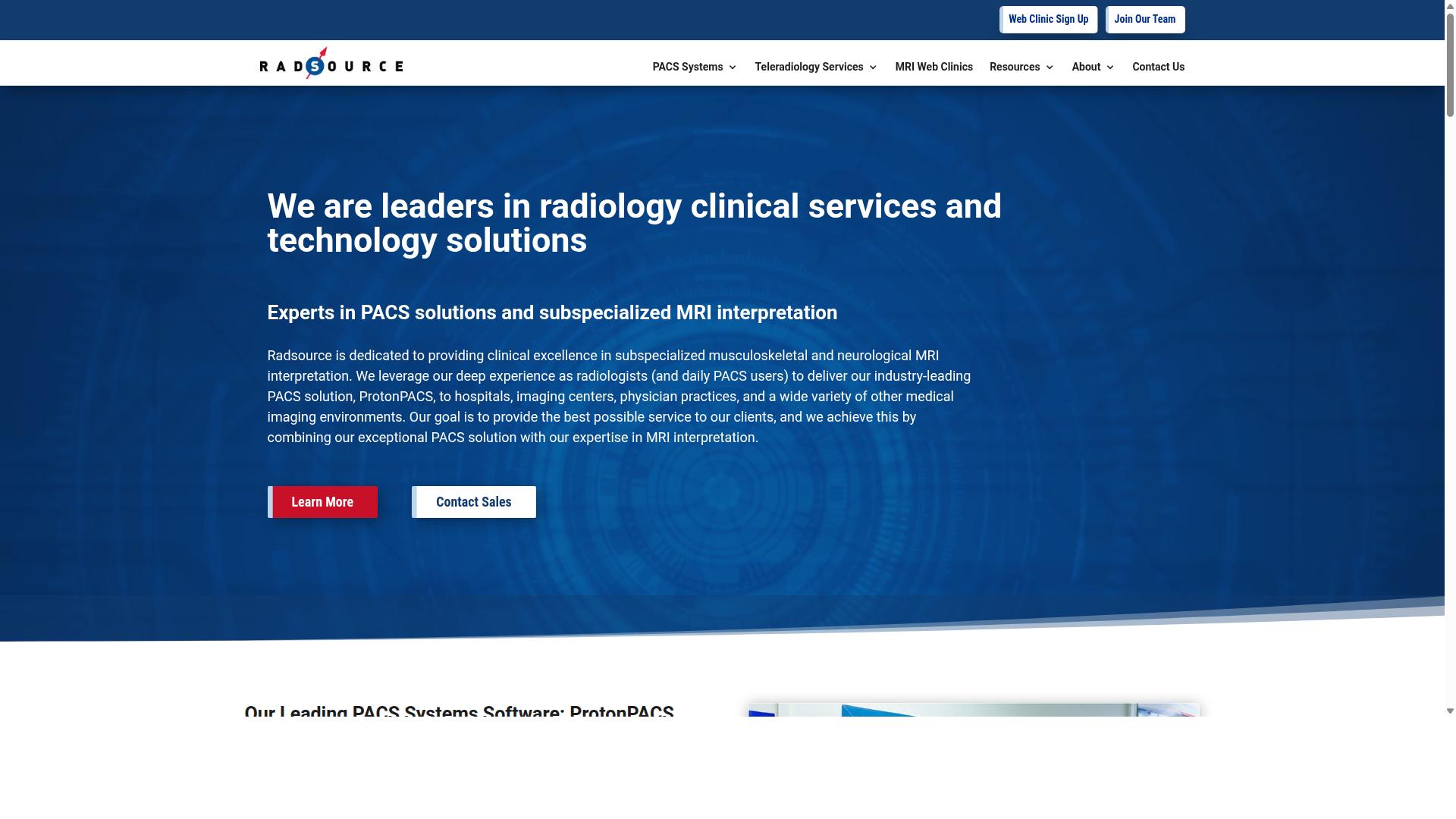
ProtonPACS is an on-premise radiology PACS solution that provides local storage and reading workstations for imaging centers and hospitals. The system focuses on keeping imaging data within the facility network.
On-premise deployment means organizations must purchase and maintain hardware such as servers and workstations. This setup requires space, power, and regular maintenance by technical staff.
Local hardware requirements can include storage arrays, network switches, and backup systems. Facilities also need to plan for redundancy and disaster recovery on site.
Integration with RIS often relies on HL7 messaging, while DICOM connectivity handles imaging modalities. These standards support data exchange between systems already present in the department.
Security features typically include role-based access, encryption, and audit trails to meet HIPAA compliance. Organizations retain full control over data policies and physical access.
Updates and patches remain the responsibility of the facility IT team. Maintenance windows must be scheduled around clinical hours to avoid workflow disruption.
Scalability depends on available budget for additional servers and storage. Growth usually requires hardware purchases rather than instant capacity increases.
Features Compared
Each sub-section examines a single feature category where Medicai and ProtonPACS differ in architecture and workflow impact.
Technical design choices affect how radiology departments integrate imaging systems with existing RIS platforms. One approach favors cloud-native scalability while the other centers around local hardware control. These decisions influence data access speed, maintenance requirements, and long-term operational flexibility for healthcare facilities managing growing imaging volumes.
Integration capabilities determine how efficiently staff can exchange studies between PACS systems and electronic medical records. Architecture differences also impact security protocols, backup procedures, and the ability to support distributed care teams across multiple locations.
Cloud PACS & Vendor Neutral Archive
Medicai's Cloud PACS and Vendor Neutral Archive store 1.7M+ studies with automatic backups and region-level redundancy.
The platform offers storage tiers that include 500 GB Starter and 2 TB Standard limits supported by AWS and Hetzner infrastructure. This setup provides built-in disaster recovery with defined SLA commitments and eliminates the need for facilities to manage physical hardware refresh cycles.
Typical ProtonPACS deployments rely on on-premise RAID configurations that require periodic local hardware updates and dedicated IT oversight. Organizations must plan hardware replacement schedules and maintain physical server space to sustain system performance over time.
Cloud-based redundancy distributes data across multiple geographic regions, reducing single-point failure risks. On-premise setups depend on local backup strategies that may require additional configuration and monitoring to achieve comparable protection levels.
Medical Image Exchange & API Transactions
Medicai processes 50M+ API transactions yearly, enabling seamless HL7/FHIR exchange with any RIS or EMR.
The Medical Imaging Uploader and DICOM Gateway facilitate direct study transfers without VPN tunnel requirements. Supported standards include DICOMweb protocols such as WADO-RS and STOW-RS that allow standardized image retrieval and storage across different vendor systems.
ProtonPACS implementations often depend on custom HL7 interfaces or third-party brokers to achieve similar connectivity between systems. These approaches may require ongoing maintenance and specialized configuration expertise to maintain interoperability with evolving RIS platforms.
API-driven exchange supports real-time study routing and automated workflow triggers between imaging and clinical systems. Traditional interface methods can introduce latency and additional points of failure when connecting distributed care environments.
Structured Reporting & Zero-Footprint Viewer
Medicai's zero-footprint viewer renders DICOM studies in-browser with embedded structured reporting templates.
The platform supports 300k+ monthly visualizations of DICOM studies through browser-based access that requires no local software installation. Template options include BI-RADS, RECIST, and orthopedic measurements that standardize documentation across radiology workflows.
ProtonPACS typically uses desktop thick-client workstations that need local software installs and VPN connections for remote access. These configurations create dependency on specific hardware and network pathways for study review and reporting activities.
Browser-based viewers enable consistent access across different devices and locations without software distribution concerns. Desktop workstation approaches may limit flexibility when radiologists need to review studies from various clinical settings or during on-call rotations.
Pricing Compared
Medicai lists transparent monthly subscriptions while ProtonPACS pricing models are hardware-dependent and site-specific. This difference affects how practices plan budgets and scale services.
Medicai publishes clear monthly rates for its cloud platform. Starter costs $249 per month and includes 500 GB of storage with unlimited user accounts and no connected locations. Standard costs $749 per month and includes 2 TB of storage with unlimited user accounts and one connected location.
Yearly billing provides fifteen percent savings. Starter drops to $209 per month and Standard drops to $639 per month when paid annually in advance.
ProtonPACS quotes usually bundle servers and perpetual licenses. These arrangements tie expenses to physical equipment purchases that require upfront capital and ongoing maintenance contracts.
Medicai plans include no hidden per-study fees. The fixed monthly rates cover storage and user access without additional charges based on study volume.
Enterprise customers can request custom storage allocations and multiple connected locations. A one-time DICOM gateway setup fee of one thousand dollars applies per location for any plan tier.
Research suggests that predictable subscription pricing helps radiology groups forecast costs more accurately than hardware-dependent models. Practices that anticipate growth often prefer the flexibility of cloud scaling over equipment purchases.
Who Should Choose Medicai
Hospitals, imaging centers, and specialty groups needing scalable cloud storage and instant multi-site access should choose Medicai.
Facilities with 50-500 beds often face growing imaging volumes and limited local IT resources. Medicai eliminates hardware maintenance while providing global access through a cloud-first design.
Outpatient radiology groups benefit from the same platform approach. They gain the ability to share studies quickly across referring physicians without managing on-premise servers.
Teleradiology firms process high volumes of studies each year. Medicai supports this scale with a proven capacity of over 1 million annual studies processed.
The zero local IT footprint matters most for organizations running lean operations. Deployment happens entirely in the cloud, removing the need for local servers and reducing infrastructure costs.
Specialty practices such as orthopedics, neurology, oncology, and cardiology also gain from unified access. They can review imaging from any location while maintaining compliance and security standards.
Virtual care providers and telemedicine platforms find value in the same architecture. Interoperability with existing RIS and PACS systems allows smooth integration without disrupting established workflows.
Personal injury lawyers, tumor boards, and clinical trial teams require reliable study access for case review. Medicai extends viewing capabilities to these stakeholders through its Patient Portal and collaboration tools.
Medical education organizations use the platform to share teaching files across institutions. This expands learning opportunities while keeping data secure and compliant with regulatory requirements.
Who Should Choose ProtonPACS
Facilities that prefer complete local hardware control and already operate dedicated radiology IT teams may prefer ProtonPACS. This on-premise solution gives organizations full ownership of their server environment and infrastructure.
Sites with strict data-residency policies often choose this approach because data remains within their physical facility. Organizations that already maintain server rooms and have existing hardware investments may find this deployment model aligns with their current setup.
Healthcare systems that require complete administrative control over their RIS and PACS environment may consider ProtonPACS. These facilities typically have established IT departments that handle maintenance, updates, and troubleshooting internally.
Some organizations prefer on-premise solutions due to specific regulatory requirements or internal security policies. The ability to manage all aspects of the imaging workflow from within their own network gives these facilities direct oversight of their radiology operations.
ProtonPACS may suit practices that want to avoid external hosting dependencies. Organizations that already possess the technical expertise and infrastructure to support local server management can maintain their DICOM and HL7 integrations without relying on cloud services.
Final Verdict
Medicai's cloud architecture, 50M+ API transactions, and transparent pricing deliver a measurable edge for integrated RIS/PACS workflows. Healthcare facilities evaluating RIS/PACS integration options face clear differences between these platforms. Medicai stands out through three decisive advantages that address real operational needs in radiology departments.
Native FHIR APIs enable seamless data exchange between systems without custom development. This standard-based approach supports DICOM and HL7 workflows while maintaining interoperability across different vendor platforms. Research suggests that FHIR-native solutions reduce integration complexity compared to proprietary alternatives.
Zero-footprint access eliminates the need for local installations or client software updates. Radiologists and referring physicians can view studies through standard web browsers, which simplifies deployment across multiple locations. This capability supports both on-premise and cloud-based workflows without additional infrastructure requirements.
Flat monthly cost provides predictable budgeting for radiology departments managing imaging operations. This pricing model removes uncertainty around storage fees, transaction costs, or user licensing that can affect long-term scalability planning.
Medicai USA maintains its US operations at 7901 4th St N, STE 300, St. Petersburg, FL 33702. Organizations seeking more information can reach the team at +1 (832) 220 1035 or [email protected]. These contact points provide direct access to implementation specialists familiar with RIS/PACS integration requirements.
Recommended Resources: