

Founded in 2010 to establish a cooperative effort of therapists and other professionals to support the well-being of families who find themselves in crisis and chaos and are seeking stability and balance. Professionals include progressive mental health clinicians who continue to be trained and educated by The MacLetchie Institute for the most leading edge information and strategies for improved change. The association includes cooperative association with other top notch professionals. Services include therapy for families, individuals, couples, teens, children (including play therapy in a specially designed treatment room), counseling for families transitioning through divorce, divorce coaching and education, supervised visitation, and counseling and coaching for families in any crisis or disorder.
Our Team
- Dr. Heather Macletchie EhingerLicensed Marriage & Family Therapist
- Jackie WoodsLicensed Marriage & Family Therapist
- Zoe TarrantIndividual & Family Therapist
- Andrew Fabian
- Jackie SmallProfessional Counselor
- Frank OliveiraLicensed Marriage & Family Therapist
- Elizabeth CoxCFP, CFA, CDFA
- Tami-Nicole GomesOffice Manager
Most radiology teams still cannot retrieve a prior exam from another site in under five minutes because their archive was built for one vendor. That gap forces duplicate scans and extra phone calls every week.
By the end of this article you will know how Medicai and ProtonPACS each handle vendor-neutral storage, which integrations they support, and their security standards. You will also see the pricing difference and a clear recommendation for your situation.
Quick Verdict: Medicai vs ProtonPACS for Vendor-Neutral Archives
Medicai delivers a HIPAA-compliant cloud VNA with a zero-footprint DICOM viewer while ProtonPACS remains an on-premise solution centered on local server infrastructure.
Medicai processes over 1M studies annually across 70 clinics and hospitals, while ProtonPACS throughput depends on localized hardware capacity and maintenance cycles.
Medicai offers unlimited user accounts starting at $249/month, whereas ProtonPACS follows per-seat licensing that scales with each additional radiologist or technologist.
Medicai includes an FDA-cleared viewer that supports enterprise imaging across multiple sites, making it the practical choice for radiology groups that need consistent access and interoperability.
At a glance: how Medicai compares to ProtonPACS on the features that matter most.
| Feature | Medicai | ProtonPACS |
|---|---|---|
| Vendor-Neutral Archives | ✓ | — |
What Is Medicai?
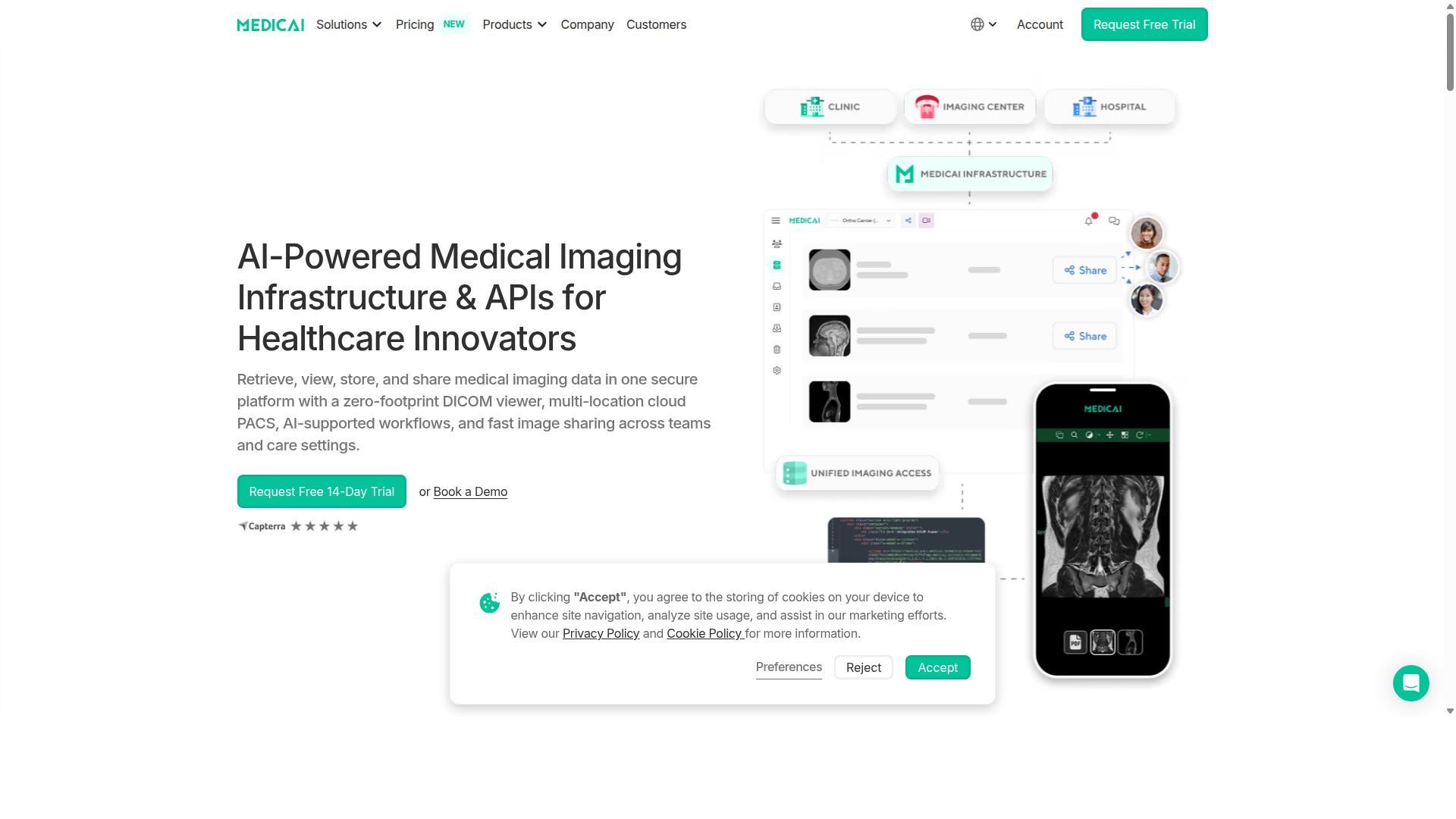
Medicai is a cloud-based medical imaging platform that consolidates retrieve, view, store, and share functions within a single secure workspace. The solution supports healthcare organizations that need a vendor-neutral archive for centralized medical imaging across multiple facilities and specialties.
Its core architecture combines four main components. A zero-footprint DICOM viewer allows clinicians to access studies without installing software. A Vendor Neutral Archive stores imaging data in standard formats. Medical Image Exchange enables fast sharing between care teams. Patient Case Management organizes studies by patient for streamlined workflows.
Medicai currently stores 1.7M+ studies and recorded 300k+ visualizations in the last year. These numbers demonstrate the platform's capacity to handle large volumes of medical imaging data while maintaining performance for daily clinical use.
The platform operates as Imaging Infrastructure as a Service. This model provides healthcare providers with modern medical imaging infrastructure without the capital expense of on-premise hardware. The cloud architecture supports interoperability with existing hospital systems and enables multi-site deployment through centralized image management.
What Is ProtonPACS?
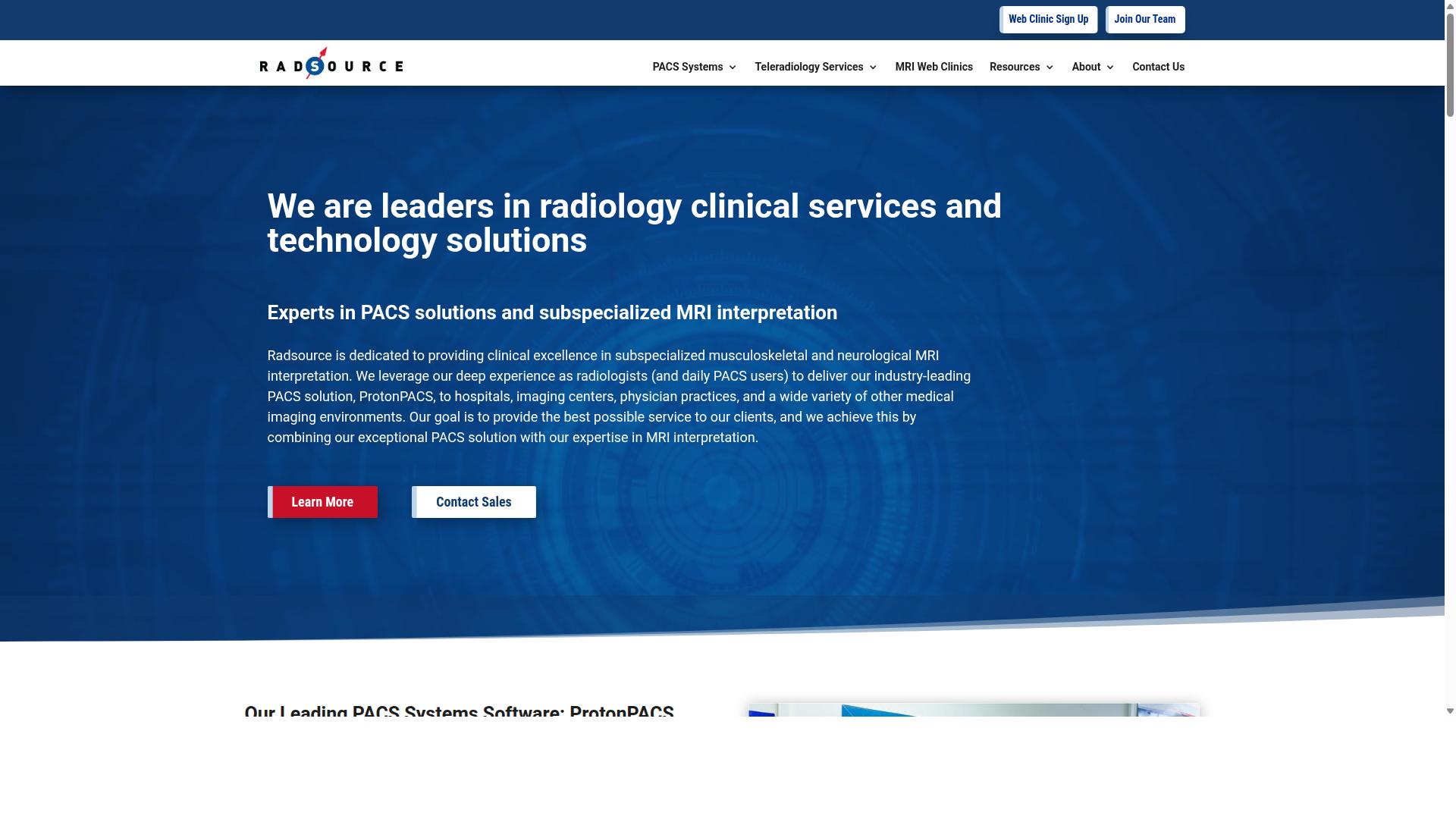
ProtonPACS is an on-premise PACS platform designed for radiology departments that prefer to host imaging data within their own data centers.
The system follows a traditional server-based deployment model. Departments install and maintain the hardware locally, which gives them direct control over their medical imaging environment.
HL7 connectivity allows ProtonPACS to exchange patient information with hospital information systems. This supports basic radiology workflow processes such as order entry and result reporting.
The archive model keeps all DICOM studies inside the facility. Organizations choose this approach when they want to manage data ownership and disaster recovery on their own infrastructure.
Some facilities find value in keeping images on-premise for regulatory or security reasons. However, this model requires ongoing cybersecurity maintenance and hardware upgrades.
When comparing ProtonPACS with cloud-based vendor-neutral archive options, teams often weigh the trade-offs between local control and long-term scalability.
Features Compared
This section contrasts the technical capabilities of each platform across three major dimensions.
Healthcare facilities evaluating vendor-neutral archive solutions must examine how storage architecture, integration depth, and security frameworks differ between cloud-native and legacy on-premise approaches.
These distinctions directly affect scalability, interoperability, and long-term operational costs for radiology departments handling growing imaging volumes across multiple sites.
Cloud-Based Vendor-Neutral Archive
Medicai's VNA resides on Microsoft Azure and Amazon AWS, offering automatic scaling and geographic redundancy without capital hardware purchases.
Starter tier includes 500 GB storage while Standard tier provides 2 TB capacity, with Backup and Disaster Recovery bundled at both levels. Automated HL7/FHIR ingestion eliminates manual file transfers during daily radiology workflow.
ProtonPACS relies on on-premise archive infrastructure that requires local SAN/NAS expansion and manual replication for data protection. This traditional model creates ongoing hardware maintenance responsibilities and potential single points of failure during storage growth phases.
Multi-site deployment scenarios favor cloud architectures that eliminate physical server management across different locations while maintaining consistent data accessibility standards.
Integration and Retrieval Capabilities
Medicai exposes RESTful APIs and DICOMweb endpoints that support 50M+ yearly API transactions for seamless EHR and AI-tool connectivity.
Native connectors include Medical Imaging Uploader and DICOM Gateway, plus partnerships with OHIF, MedDream, and MD.ai for specialized visualization needs. These integrations reduce implementation timelines for hospitals seeking rapid interoperability.
ProtonPACS typically uses a generic HL7 interface engine without native cloud APIs, which may create additional configuration requirements when connecting to modern EHR systems or AI diagnostic platforms.
Facilities prioritizing AI integration and third-party connectivity often find cloud-based APIs reduce custom development work compared to traditional interface engine approaches.
Security and Compliance Standards
Both platforms claim HIPAA alignment, yet their implementation paths diverge sharply when it comes to certification breadth and audit capabilities.
Medicai maintains HIPAA and GDPR compliance with FDA/CEE cleared viewers and follows OWASP security guidelines. Audit logging provides detailed access tracking across all imaging studies processed on the platform.
ProtonPACS offers generic on-premise security measures without concrete certification documentation or published uptime SLAs, leaving healthcare organizations to evaluate individual implementation security independently.
Cloud platforms with established compliance programs typically reduce regulatory preparation time compared to facilities managing on-premise security frameworks internally.
Pricing Compared
Medicai offers transparent monthly subscriptions, whereas ProtonPACS pricing remains quote-based and hardware-dependent. The clear cost structure helps organizations budget more accurately for their vendor-neutral archive needs without surprise expenses.
Medicai provides three subscription tiers with predictable monthly billing. The Starter plan costs $249 per month and includes 500 GB of cloud storage with unlimited user accounts and zero connected locations. This option works well for smaller practices or initial testing phases.
The Standard plan costs $749 per month and expands capacity to 2 TB of cloud storage. Organizations receive unlimited user accounts along with one connected location for broader deployment across their radiology workflow.
Enterprise customers can access custom pricing that scales cloud storage and supports multiple connected locations. This flexibility accommodates growing multi-site deployment requirements without rigid plan limitations.
Yearly billing provides 15 percent savings across all tiers. The Starter plan drops to $209 per month and the Standard plan reduces to $639 per month when paid annually.
ProtonPACS requires hardware purchase plus annual maintenance fees. This model creates upfront capital expenses and ongoing operational costs that differ from Medicai's straightforward subscription approach.
Medicai includes a free 14-day trial of Starter plan features without requiring a credit card. Per-study pricing remains available for enterprise customers who prefer usage-based billing over fixed monthly fees.
Who Should Choose Medicai
Multi-location imaging centers and specialty groups seeking predictable cloud costs with zero on-site hardware should evaluate Medicai first.
Hospitals and imaging centers that need rapid deployment often face lengthy implementation timelines with traditional vendor-neutral archive solutions. Medicai addresses this challenge through its cloud-first architecture that eliminates hardware procurement and installation requirements.
Specialty practices in radiology, cardiology, and orthopedics benefit from the platform's unlimited user accounts when multiple physicians need simultaneous access across locations. Global access capabilities allow remote specialists to review studies without additional infrastructure investments.
Organizations handling high study volumes appreciate the 1M+ annual capacity without concerns about performance degradation or additional licensing fees. This scalability supports growing practices that anticipate increased imaging demand over time.
The vendor-neutral archive approach ensures compatibility with existing PACS systems while providing modern cloud storage benefits. Interoperability features accommodate DICOM workflows and HL7 integration needs common in multi-vendor environments.
Cardiology and orthopedic groups managing complex imaging requirements find value in the platform's ability to support specialty-specific workflows without custom development. Reduced IT overhead allows clinical teams to focus on patient care rather than system maintenance.
Who Should Choose ProtonPACS
Health systems that mandate local data residency and have existing server infrastructure may lean toward ProtonPACS. Large hospital networks with strict internal security policies and dedicated radiology IT teams often prefer this approach. Their established hardware investments create natural alignment with on-premise solutions.
Organizations running complex multi-site deployments frequently face unique challenges with data ownership expectations. These facilities typically maintain robust internal cybersecurity protocols that require complete control over medical imaging storage. Their IT departments possess specialized expertise necessary for ongoing system maintenance and updates.
Institutions with extensive modality support requirements and established HL7 integration frameworks represent another common profile. These networks often operate under strict audit logging mandates that demand granular oversight of all image retrieval activities. Their enterprise imaging strategies depend on seamless interoperability across multiple legacy systems.
Facilities prioritizing disaster recovery through local backups alongside compliance with specific data residency regulations may find ProtonPACS suitable. Their vendor-neutral archive implementations typically involve substantial archive consolidation efforts spanning years of accumulated imaging data.
Final Verdict
For most radiology groups prioritizing rapid deployment, predictable costs, and global access, Medicai's cloud VNA is the stronger strategic choice.
Three factors drive this conclusion. The zero-footprint viewer eliminates local software installation. Transparent pricing starting at $249/month removes budgeting surprises. 1.7M+ studies already hosted confirm the platform handles real-world volume without disruption.
ProtonPACS may still suit organizations locked into on-premise mandates. Facilities with strict data-sovereignty rules or legacy hardware contracts often retain existing infrastructure despite higher long-term costs.
Medicai's cloud architecture supports HIPAA and GDPR compliance while maintaining FDA/CEE cleared viewers. The platform processes 1M+ studies per year and manages 2M+ imaging studies uploaded across 70 clinics and hospitals.
Interoperability remains straightforward. The system follows OWASP security guidelines and delivers 50M+ yearly API transactions for HL7 and FHIR connections. 10,000+ active doctors already use the platform for routine image retrieval.
Scalability differs sharply between approaches. Cloud VNAs expand storage automatically during growth periods. On-premise systems require capital planning cycles that delay multi-site deployments and archive consolidations.
Cost structures favor subscription models for most practices. Upfront hardware purchases create depreciation schedules and maintenance contracts that extend beyond initial implementation. Cloud pricing aligns expenses with actual study volume.
Both platforms support DICOM standards and enterprise imaging workflows. The decisive difference appears in deployment speed and ongoing operational overhead rather than core imaging capabilities.
Recommended Resources: